
facebook tracking

358 Fence 7 Buying Tips for Global Buyers

Buying a 358 fence across borders is not simply a matter of comparing prices. The cheapest quotation can hide weak steel, incomplete accessories, or expensive inland delivery. Global buyers need a clearer method.

Daniel Mercer, a perimeter-security consultant with more than twenty years of field experience, says, “A 358 fence should be judged as a complete security system, not as separate wire panels.” That principle matters. A panel may look strong under warehouse lighting, yet perform differently after outdoor installation. Check wire diameter, mesh accuracy, panel size, post strength, coating thickness, and connection hardware. Small gaps can affect both security and installation speed.

This guide presents seven practical buying tips for international purchasers. It considers factory experience, material specifications, surface treatment, packaging, certifications, lead time, and after-sales support. Ask for test reports and clear technical drawings. Request close-up photographs of welds and coating edges. Confirm whether the quoted price includes posts, clamps, bolts, gates, and export packaging. It often does not.

Do not ignore the destination site. Coastal air, heavy rain, strong wind, and uneven ground can change the required specification. A powder-coated 358 fence may need different protection from a hot-dip galvanized model. Local installers can also reveal problems that a sales brochure misses.

Some buyers focus too heavily on the first invoice. I understand why. Budget pressure is real. Still, replacement panels, delayed containers, and missing fittings can cost more than a modestly higher purchase price. Compare the complete delivered solution, then challenge your own assumptions before placing the order.
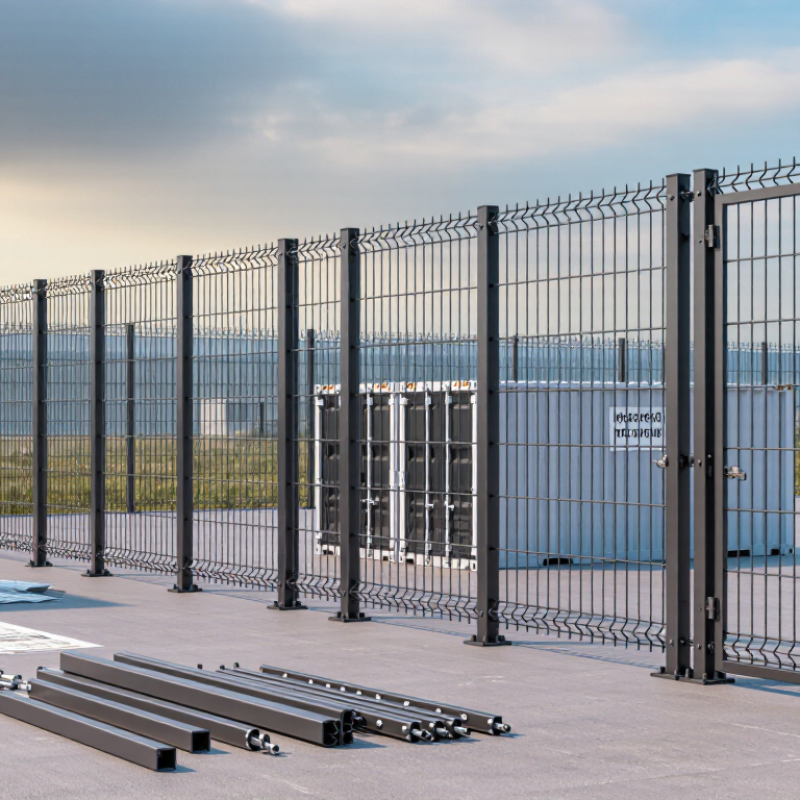
358 Fence 7 Buying Tips for Global Buyers

Understanding 358 Security Fence and Its Main Applications

358 security fence uses welded steel mesh with narrow 76.2 × 12.7 mm openings. This design limits climbing footholds and restricts hand access. It also preserves clear sightlines around sensitive sites. Common applications include airports, rail facilities, data centers, utilities, schools, and correctional facilities. MarketsandMarkets’ 2023 Perimeter Security Market report valued the sector at approximately USD 9.4 billion in 2023. It forecasts about USD 14.2 billion by 2028. Demand is rising, but fence selection still depends on site risk, climate, and maintenance access.

Tips: Global buyers should verify wire diameter, panel height, coating thickness, and welded-joint quality. Ask for test records under EN 10223-7 or an equivalent national standard. Galvanized steel suits humid areas, while additional polymer coating may improve corrosion resistance. Do not judge protection by height alone. Gate design, hinges, locks, lighting, and camera coverage can create weaker points. Visibility matters.

Installation details deserve careful review. Concrete strength, post spacing, soil movement, and drainage affect long-term stability. A 2024 International Facility Management Association survey reported that maintenance and lifecycle planning remain major concerns for facility professionals. That supports choosing replaceable panels and accessible fasteners. Some assumptions fail. A taller fence may still perform poorly beside trees, equipment, or uneven ground. Measure twice. Request samples, coating certificates, and independent inspection before shipment.

Key Specifications to Compare Before Purchasing 358 Fence

Choosing 358 fence requires more than checking height and price. The mesh aperture is usually about 76.2 by 12.7 millimeters, creating narrow openings that resist climbing. Confirm this measurement on technical drawings, not only in product photos. Small gaps matter.

Wire diameter also deserves close attention. A common specification is 4 millimeters, but actual tolerances can affect rigidity and cutting resistance. Ask whether the stated diameter is measured before or after coating. I have seen buyers compare prices using different measurement methods. That creates a false bargain.

Panel height, width, and weight must match the planned posts and foundations. Heavier panels may need stronger posts, closer spacing, and more reliable fixing clips. Check the steel grade, tensile strength, and welding consistency across every joint. Uneven welds can become weak points.

Coating quality is equally practical. Compare galvanized treatment, powder coating, coating thickness, and salt-spray test results. A polished surface is not proof of long-term corrosion protection. Request inspection records and sample photographs from several production batches.

Installation conditions can change the correct specification. Coastal sites, industrial areas, and cold regions may require different corrosion protection and foundation designs. Confirm tolerances, packaging dimensions, and replacement-panel availability before ordering. Freight damage is easy to overlook. So is future maintenance. A dependable supplier should explain test methods, inspection stages, and limitations clearly. If the data feels vague, pause before purchasing.

358 Fence Buying Tips for Global Buyers: Key Specifications to Compare

The chart compares commonly specified 358 welded security fence panel dimensions. Standard 358 mesh uses a 76.2 × 12.7 mm aperture and commonly uses 4 mm horizontal and vertical wires. Typical panel heights include 1,800 mm, 2,000 mm, and 2,400 mm, while a frequently specified panel width is approximately 2,515 mm. Buyers should verify wire diameter, panel tolerances, coating system, post design, fixing accessories, and applicable local standards before purchase.

How to Select the Right 358 Fence Materials and Finish

When selecting 358 fence materials, start with the site, not the catalogue.

This mesh usually has 76.2 by 12.7 millimetre openings. A common wire diameter is 4 millimetres, but specifications can vary. Ask for the steel grade, tensile strength, weld quality, and panel tolerance. Do not accept “heavy duty” without test records. Request samples.

The finish should match the environment.

Hot-dip galvanizing offers strong protection for outdoor steel and humid conditions. A duplex system, combining galvanizing and powder coating, suits coastal or industrial areas better. Check the zinc coating thickness, coating adhesion, and colour consistency. Inspect welded joints closely. Thin spots around welds may rust earlier than the panel surface. Small details matter.

I once focused too much on mesh size and overlooked the posts.

That was a costly lesson. Posts, clamps, gates, and fixings should use compatible materials. Otherwise, contact corrosion can appear near connections. For global orders, request an inspection report, material certificate, coating data, and clear packing details. Confirm panel dimensions in millimetres, not informal descriptions. Check local wind loads, security requirements, installation rules, and import documentation before payment. Some suppliers provide excellent panels but weak packaging. Bent corners can delay an entire project. Ask for reinforced pallets and moisture protection. Allow a small tolerance in colour and dimensions; perfect uniformity is not always realistic.

Global Standards, Certifications, and Export Requirements

358 Fence 7 Buying Tips for Global Buyers

A 358 fence uses narrow openings, commonly 76.2 by 12.7 millimetres, limiting footholds and tool access. Buyers should confirm wire diameter, panel tolerance, post thickness, and weld strength before comparing prices. EN 10223-7 can guide welded steel mesh specifications, while ISO 1461 covers hot-dip galvanized coatings. Powder coating is useful, but it cannot repair poor galvanizing.

Ask for recent test reports, coating measurements, welding inspection records, and a traceable material certificate. ISO’s Survey 2023 recorded more than 1.26 million ISO 9001 certificates worldwide. Certification signals a controlled system, not perfect production. That distinction matters. A factory may hold certification while one shipment still contains bent panels or weak welds. Independent pre-shipment inspection remains sensible, especially for large orders.

Export paperwork needs equal attention. Confirm the correct HS classification, commercial invoice details, packing list, country of origin, and destination marking rules. Wood packaging may require ISPM 15 treatment. The World Bank’s Logistics Performance Index 2023 shows clear differences in customs efficiency and shipment reliability between markets. Therefore, request carton dimensions, gross weights, loading photos, and realistic lead times. Incoterms 2020 should define who pays freight, insurance, and import clearance. Small gaps cause expensive delays. One practical weakness is relying on copied certificates without checking validity, scope, and issuing-body records. A careful buyer checks twice.

358 Fence 7 Buying Tips for Global Buyers - Global Standards, Certifications, and Export Requirements

No. Buying Dimension Verified Technical Data or Requirement Why It Matters to Global Buyers Recommended Verification
1 Mesh Opening A standard 358 fence uses approximately 76.2 mm horizontal spacing × 12.7 mm vertical spacing, commonly described as a 3 in × 0.5 in mesh. The narrow opening makes the panel difficult to climb and limits the passage of common hand tools. Confirm the opening size by measuring clear distances between adjacent wires after welding. State tolerances on the purchase specification.
2 Wire Diameter and Steel Grade The commonly supplied wire diameter is about 4.0 mm, approximately equivalent to 8 gauge in some gauge systems. Low-carbon welded steel wire is widely used, but the exact chemical and mechanical requirements must be specified. Wire diameter affects cutting resistance, panel rigidity, weight, freight cost, and post-load performance. Request a dimensional inspection report and, where required, a mill test certificate under EN 10204. Do not rely on gauge designation alone because gauge systems can differ.
3 Panel Height, Width, and Tolerance Common project heights are approximately 1.8 m to 3.0 m; panel widths are often around 2.0 m to 2.5 m. These are market conventions, not universal standards. Panel dimensions must match posts, gates, foundations, transport limits, and the required security level. Approve a dimensioned drawing showing panel length, height, wire diameter, post spacing, fixing points, and permitted tolerances before production.
4 Corrosion Protection Typical options include zinc-coated wire, welded panels galvanized after welding, or zinc-coated steel with an additional organic coating. Hot-dip galvanizing of fabricated steel articles can be specified with ISO 1461; wire coating requirements may be specified with EN 10244-2. Coating method and coating mass influence service life, especially in coastal, humid, industrial, or de-icing-salt environments. Specify the applicable standard, coating type, coating mass or thickness, salt-spray requirement if relevant, and visual acceptance criteria. Confirm that cut edges and weld areas are adequately protected.
5 Product and Quality Standards For welded steel fence panels, buyers may reference EN 10223-7 where applicable. Zinc-coated steel wire may be specified with EN 10244-2, and fabricated hot-dip galvanized steel components may reference ISO 1461. The selected standard must match the product and destination market. A standard provides a common basis for dimensions, coating, testing, inspection, and acceptance. Put the exact edition and applicable clauses in the contract. Confirm whether local building, perimeter-security, fire, or infrastructure rules impose additional requirements.
6 Certifications and Inspection Documents Commonly requested documents include a product specification, inspection report, coating test results, material traceability documents, and an EN 10204 3.1 inspection certificate when material verification is required. ISO 9001 is a quality-management certification, not proof that every fence meets a specific product standard. Correct documentation helps customs clearance, project approval, warranty review, and third-party inspection. Check certificate scope, issuing body, certificate validity, batch or heat numbers, test methods, and consistency with the purchase order. Do not treat a general management certificate as a product-performance certificate.
7 Export, Packaging, and Customs Requirements Prepare a commercial invoice, packing list, transport document, and certificate of origin when required. The appropriate HS classification depends on the product construction and coating; welded iron or steel mesh is commonly considered within HS heading 7314, but the final code must be confirmed with the destination customs authority or broker. Accurate classification, packaging, and documents reduce customs delays, unexpected duties, corrosion during transit, and cargo damage. Confirm Incoterms, importer-of-record responsibilities, duties, marking rules, pallet dimensions, gross and net weight, container loading plan, moisture protection, and destination-specific labeling before shipment.

Note: Dimensions shown as “common” or “typical” are market practices rather than universal legal requirements. Final specifications should be confirmed against the destination country’s regulations, project drawings, and customs classification.

How to Evaluate Suppliers, Pricing, Packaging, and Delivery Terms

358 Fence 7 Buying Tips for Global Buyers
How to Evaluate Suppliers, Pricing, Packaging, and Delivery Terms

A reliable fence supplier should provide more than attractive photos. Request factory registration details, recent production records, material specifications, and independent test reports. A video inspection helps, but it is not proof. Ask to inspect raw materials, welding points, coating thickness, and finished bundles. ISO 9001 certification can indicate process control, yet it cannot replace your own quality checks.

Compare prices on identical specifications and the same Incoterm. Separate product cost, tooling, inland transport, insurance, customs charges, and destination fees. The International Chamber of Commerce explains that Incoterms define delivery responsibilities, but they do not determine product quality or payment security. A low quotation may simply exclude important charges. That mistake is common.

Packaging deserves practical attention. Use moisture-resistant wrapping, reinforced corners, separators, and clear bundle labels. Record bundle weight and dimensions before shipment. UNCTAD’s Review of Maritime Transport reports that ships carry over 80% of global merchandise trade, so port delays can affect even well-made products. The World Bank’s 2023 Logistics Performance Index found supply chains take about 44 days, on average, from port entry to final destination. Confirm whether lead time starts after payment, drawing approval, or material purchase. I would also add a buffer. Perfect schedules rarely survive real shipping conditions.

Article Source: